Showing posts with label savings. Show all posts

Investing Versus Saving In Bank

bank
Perhaps you’ve thought of saving money? If you haven’t, you can read my previous post about savings. In this post, I will share my views on investing in comparison to saving in banks.

You may already have encountered some people who talk about investments and how it is way better than saving your money in banks. Yet, in some instances, you might also hear that investments are not worth it and it’s better to be safe and save your money in the bank. Well, the answer is, it depends. The choice greatly relies on what you see as purpose of your money.

You have total control of the cash that you carry right now. In fact, you could spend all your money down to the last cent this very moment. These days, it’s easy to buy anything and spend any amount of money. That’s how fickle money is. You may recount some news you hear on lottery winners who had poorly spent their enormous capital in just a matter of months, which most thought as impossible.

On the other hand, you also have the power to use your money wisely. For most people, using money wisely means saving it in order to allot it for a better use in the future.

However, just putting money in the bank may not entirely be a wise decision. You’re 100 thousand pesos today, might not buy as much goods in 5 years compared to what you can buy today.

Yes, inflation is real and it has a yearly average of 8 percent here in the Philippines. The annual interest gain rates for your money in the bank is about 3 percent. As you can see, money is not really growing and it definitely depreciates over time when you put it solely in the banks.

However, placing money in the banks also has its benefits. You can withdraw your money anytime and it is perfect for dire situations where you need the ready cash.

In investing, you do have a chance to increase your money significantly. This depends on what investment modes or vehicle you avail. There are lot of investment opportunities out there. It’s important to note that a considerable amount of Filipinos are not into investments yet.

Here are some of the common modes of investments:

Stocks - a very good way to invest and you can take a role as daily trader or long term trader. Gains are likely, yet risks are moderate to high. This depends on how you do your trades.

Mutual Funds - if you think stocks is not your thing but you still want to gain, then you may want to trust your money to established organizations of professional traders to do the decisions for you. This is how mutual funds work. Most banks offer mutual funds. Mutual fund organizations have their own risk profiles that you can compare and help you decide which one is for you.

Cooperatives - it’s another famous investment model. Though I have to be honest I’m not so particular about this. I know however that you trust a cooperative for your money and it will be used as a central fund for the members, optimizing it for gains, thus increasing the value of the money you put up.

What do they all have in common? They have risks. You have to note that you may lose all your money.

If you’re a person who’s afraid to risk or a person who’s not willing to lose, then investment is probably not for you. However, there’s a smart way to invest and it’s just taking a small percentage of your income for these investments. You can check this type of allocation in my previous blog.

What’s the verdict? As you can see, it really depends. If you were to ask me, I’d save in the bank and at the same time invest. It doesn’t really matter if you started small, as long as you stay consistent and set your eyes on the long-term goal.

Want more tips? Here’s something interesting I learned.


Since we’ve mentioned on the benefits of saving in the bank to use in a difficult situation such as losing a job, hospitalization and unforeseen events, there’s a way to solve this.

An interesting technique I read from a book is to save money in the bank that equals to 6 months of your monthly needs.

Assuming that your  monthly salary matches your monthly expense, then you just multiply it by 6 to come up with the money you want to put in your bank. So if you lose a job or an emergency happens, you have spare money to use. Six months is an adequate period to land a new job. Now, you have a secure amount in the bank and the rest of it can be invested.

But for the risk takers, you may just want to invest most of your money. If emergency situations arise, they think abundantly and see through it that they can find money they need, at any given time. That’s one audacious approach but very plausible.

As usual, thanks for reading. Don’t forget to leave your comments below.
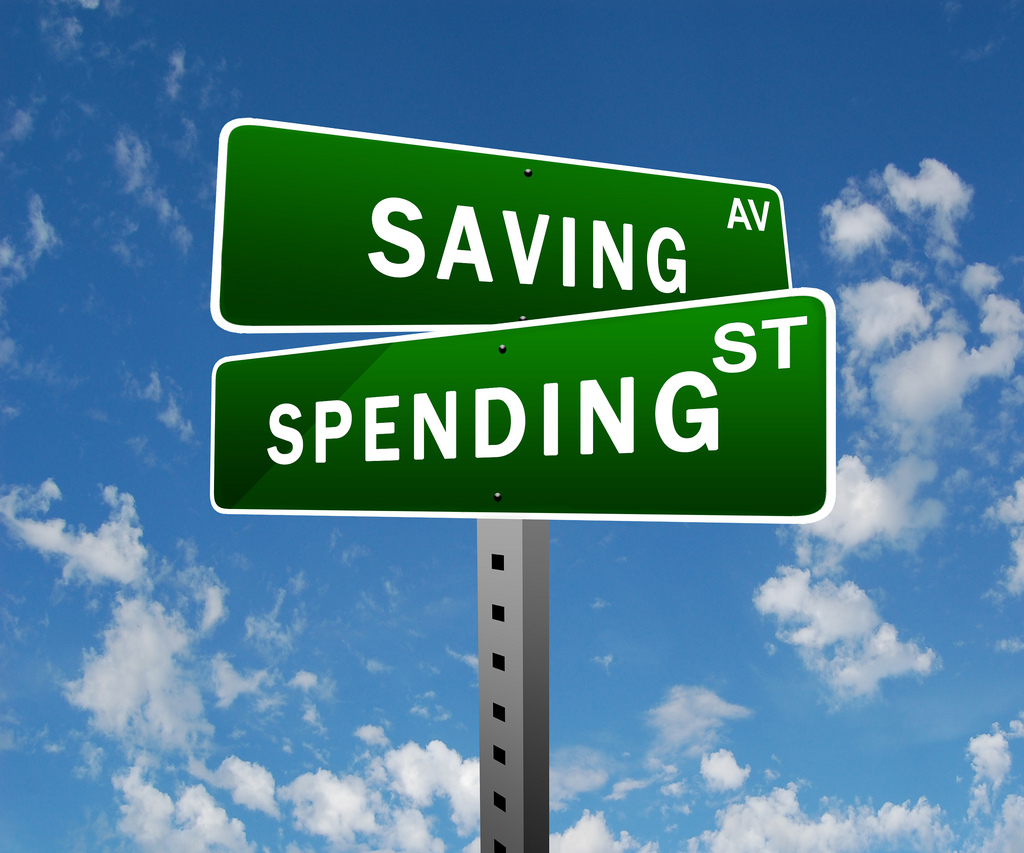
The Holy 10 Percent - The Secret To Saving

The Secret To Saving
Saving has always been a struggle for me. It's usually easy for one to spend money on things that's passing rather than considering the better choice of saving. It's easy to be mystified and obey the urge of buying a new, trendy pair of shoes, gadgets or have an extravagant night-out with friends. Unfortunately, having no savings so often leads to despair.

I get upset realising that I don't have enough money when a good opportunity for investment comes or when a long-awaited sale arrives. Most frequently than not, I get gloomy contemplating that I don't have anything substantial in the bank. But this did not go as such for long. Though I'm not talking that I found an absolute solution, I consider it lucky to meet such a good approach.

I call this the holy 10 percent. It basically means saving up or setting aside 10 percent from each income or inflow of money you get. It's quite easy and anyone can start today!

Say you get a salary of 20,000 pesos, you simply set aside 2000 for your savings.  This means that even if you just get a 200-pesos salary or allowance a day, you should be able to set aside 20 pesos for this purpose. Hence, it does not matter how small or big your income flow is. You only need to meet 10 percent and that's it. This is what Robert Kiyosaki, the author of poor dad rich dad, refers to as paying yourself first.

The truth is, most of us never reach a certain amount of savings because we never set aside money in the first place. Another known reason of failure is unwisely saving too much or in bulk. Depending on your control (which usually requires great amount of discipline), this could be fine. However, if you eventually feel drained and end up using the money after all, especially when "seemingly demanding" necessities arrive, then this is certainly not working for you. As you can see, this is the benefit of getting 10 percent only. It's really a small amount compared to the whole and in fact, you won't even notice the deduction.

But, being able to save up the 10 percent is only half of the story. You should have something to look forward to make it worthwhile. In short, you have to give it a meaning and purpose. Consider these scenarios:

Scenario 1: A dear friend came to you and proposed a business plan that you really think would take off. But unfortunately, you don't have enough money to invest at the moment and so your friend goes to another person that he could do the business venture while leaving you behind…

Scenario 2: You've been wanting to invest in stocks, but couldn't seem to find a way to save up for the initial investment (which is by the way 5000 pesos only). Or you might have really considered investing in stocks or mutual funds but you don't see yourself able to cope with the challenge of setting aside an amount each month.

The answer to all these scenarios is the holy 10 percent! And I think you're now getting the value of this. You don't really have to worry about anything. You just set aside 10 percent of money and consider it gone. It might be best not to call this savings. Just call it something else, perhaps the holy 10 percent! hihi. Just because you do know that it is an investment for the future - serves for a better purpose.

You can also expand this to three 10-percents. I do this, but it's up to you if you follow it. The first 10 percent, I devote it to my long term investments (the one we've been talking about so far). It could be stocks, mutual funds or regular savings. The second 10 percent goes to ideas. It could lead to a business opportunity. This goes for your wildest imaginations, which you think may profit onwards. Lastly, I set aside another 10 percent for giving or tithes. It's basically returning some of your blessings to the world just because you are so blessed! Awesome right?

I find these three 10-percents very fulfilling. Though it might be a challenge at first, you'll certainly get the hang of it. The secret is setting aside the 10 percent first thing whenever you receive a pay, unexpected bonus, other income, or even from gifts. Make it a priority. Following this approach, you will truly reach abundance and perhaps worry less about the future.